You searched for what a channel manager costs because you're pricing one out — probably staring at a single advertised number and wondering whether it's worth it. Here's the honest answer most comparison pages skip: a channel manager does exactly one job, and it's never the whole bill.
A channel manager keeps your rates and availability synced across the online travel agencies. That's genuinely valuable. But it doesn't run your property, it doesn't take a direct booking, and it doesn't market anything. So the question behind the question is usually: am I about to pay for a tool that only does part of the job? Often, yes.
Below is what a channel manager actually does, what it pointedly does not include, and what the all-in number looks like once you add the rest of the stack you still need.
What a channel manager actually does
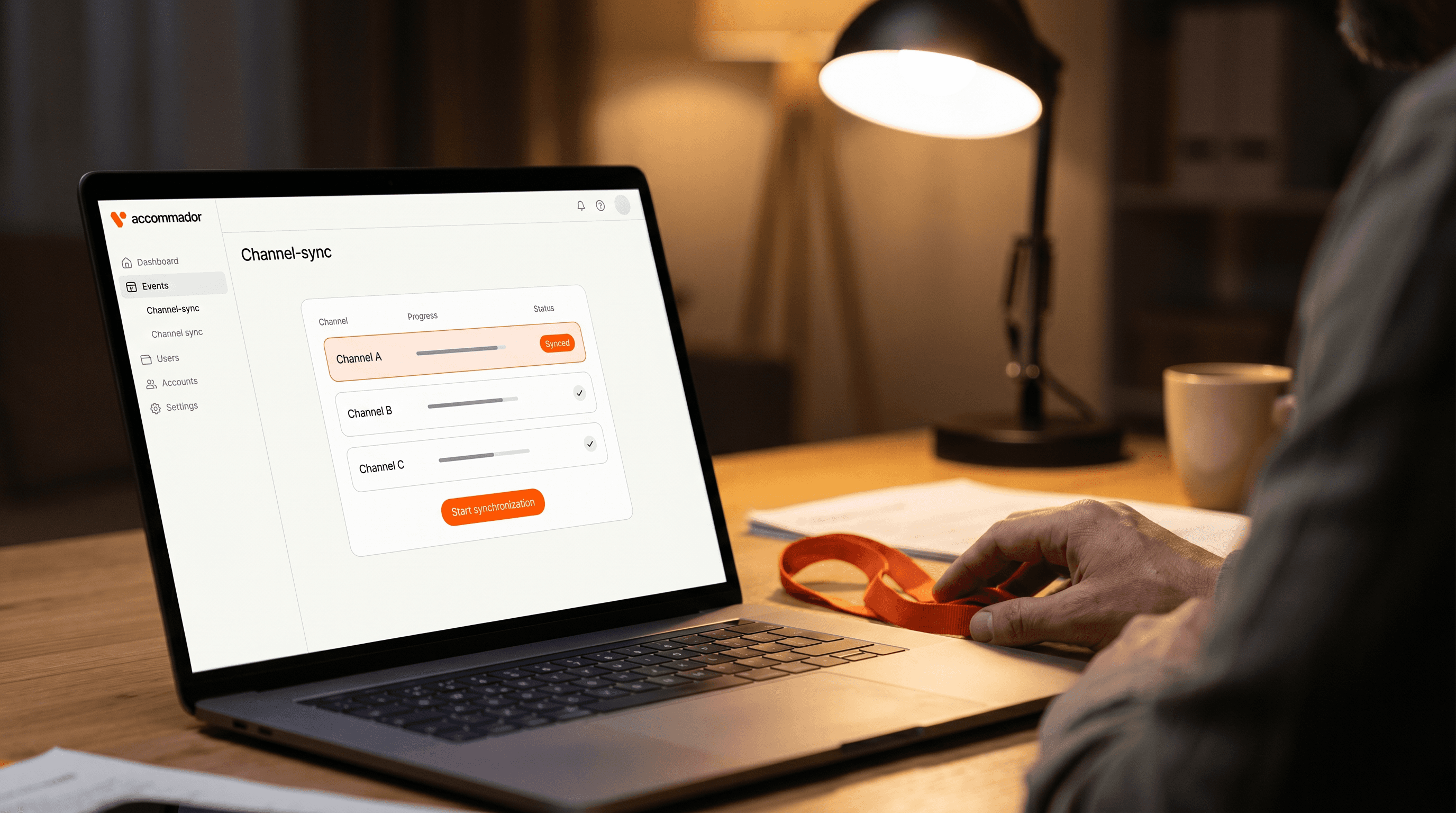
A channel manager is the plumbing between your property and the OTAs — Booking.com, Expedia, Airbnb, Agoda and the rest. Its single job is to keep two things in sync across every channel at once:
Availability — so you don't sell the same room twice and trigger a double-booking.
Rates and restrictions — so a price change pushes to every channel instead of you logging into each extranet by hand.
Before channel managers, operators updated each OTA manually and lived in fear of the overbooking that follows a missed update. A good channel manager kills that risk and saves hours a week.
But notice what's in scope: it moves data between you and the OTAs. It is OTA infrastructure. And that's exactly why a channel manager alone doesn't move you toward the thing that actually protects your margin — direct bookings.
What a standalone channel manager does NOT include
- This is where the headline price gets misleading. A channel manager on its own does not give you:
- A PMS — the calendar, guest records, housekeeping and reservation management that actually run the property.
- A branded booking engine — the "Book Now" button on your own website that takes commission-free direct reservations.
- Marketing or CRM — no email automation, no SMS, no reputation and review management, no funnel or campaign tools.
- Payments — no card capture, no security-bond pre-authorisation holds. You bolt on a separate gateway.
- Accounting reconciliation — no self-reconciling Xero; you or your bookkeeper match payouts by hand.
So the channel manager keeps your OTA listings tidy — and it sends more guests to the OTAs, where Booking.com and Expedia take 15–18%+ commission on every reservation. If reducing that bleed is the goal, the channel manager is necessary but nowhere near sufficient.
The real cost: it's never just the channel manager
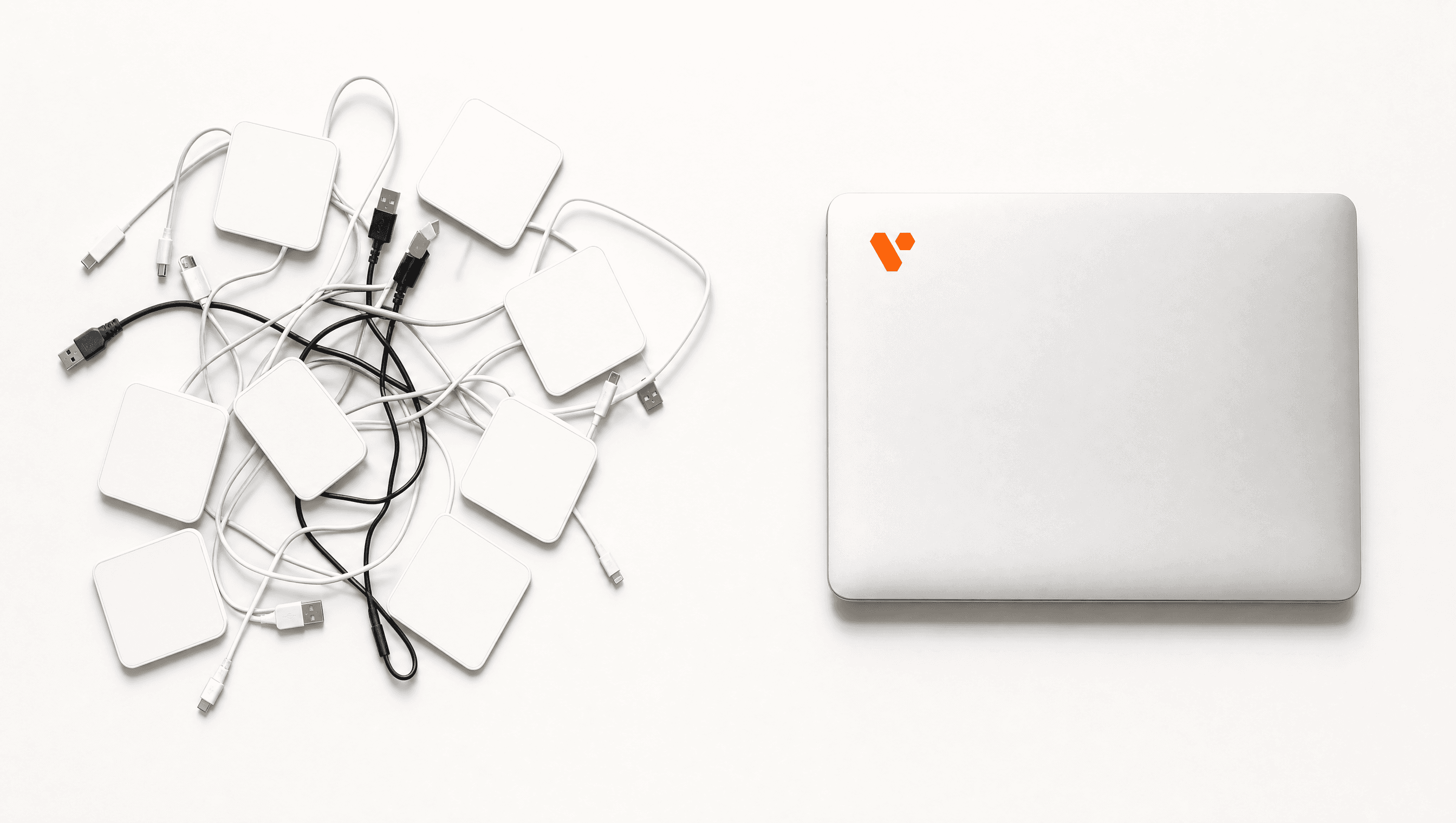
Here's the trap independent operators fall into. You start with a channel manager. Then you realise you need a PMS, so you add one. Then a booking engine, because you want direct bookings. Then email, SMS, reviews, a website builder. Each is a separate login, a separate invoice, a separate integration that breaks at the worst time.
A typical 30-room operator ends up running 6–9 separate tools that stack up to ~$1,000+/mo — and that's before you count the bookings you quietly lose when one of those integrations drops. The channel-manager line you searched for is the first item on that list, not the total.
How Accommador prices it differently
Accommador rolls the channel manager into one platform instead of selling it as a standalone line item. The 100+ channel manager isn't a tier you unlock or an add-on you pay for — it ships with everything else, in one login and one bill.
That includes the PMS, the branded booking engine, Stripe payments with security-bond holds, self-reconciling Xero, and the full marketing and CRM suite — email, SMS, reputation and funnel tools. It also includes the parts most operators don't discover they need until later: the minimum-stay engine that surfaces the nearest bookable dates, server-side ad attribution that survives Apple's ~7-day cookie cap, and multi-account Xero with auto-invoicing.
Put it side by side. A standalone channel manager gives you OTA sync and nothing else. Accommador gives you the channel manager plus the PMS, booking engine, payments, Xero and marketing — for less than the patchwork stack it replaces, with the price published on the page rather than gated behind a demo.
The leak a channel manager can't fix
There's one structural problem a channel manager will never solve, because it sits on the wrong side of the booking: the min-stay leak.
If you run minimum-stay or fixed-arrival rules — most houseboats, lodges, cabins and seasonal villas do — here's what happens. A guest searches dates that miss your rule. Most booking engines simply return "no availability." The guest assumes you're full, bounces to an OTA, and books a competitor. You never see the lost reservation. The channel manager dutifully syncs the OTA booking you didn't need to lose.
Accommador's minimum-stay engine handles that moment differently: instead of a dead-end "no availability," it surfaces the three nearest bookable dates and wins the booking direct — commission-free. That's the difference between infrastructure that feeds the OTAs and infrastructure that protects your margin. It's built in for the same reason everything else is: the moment you lose a guest is too expensive to leave to a tool you bought separately.
The closed-loop direct-sales engine on Accommador — channel manager, PMS, booking engine, marketing, payments and Xero reconciliation in one place — starts at $500 AUD/mo per location, everything included. Monthly billing, cancel anytime. Start free.