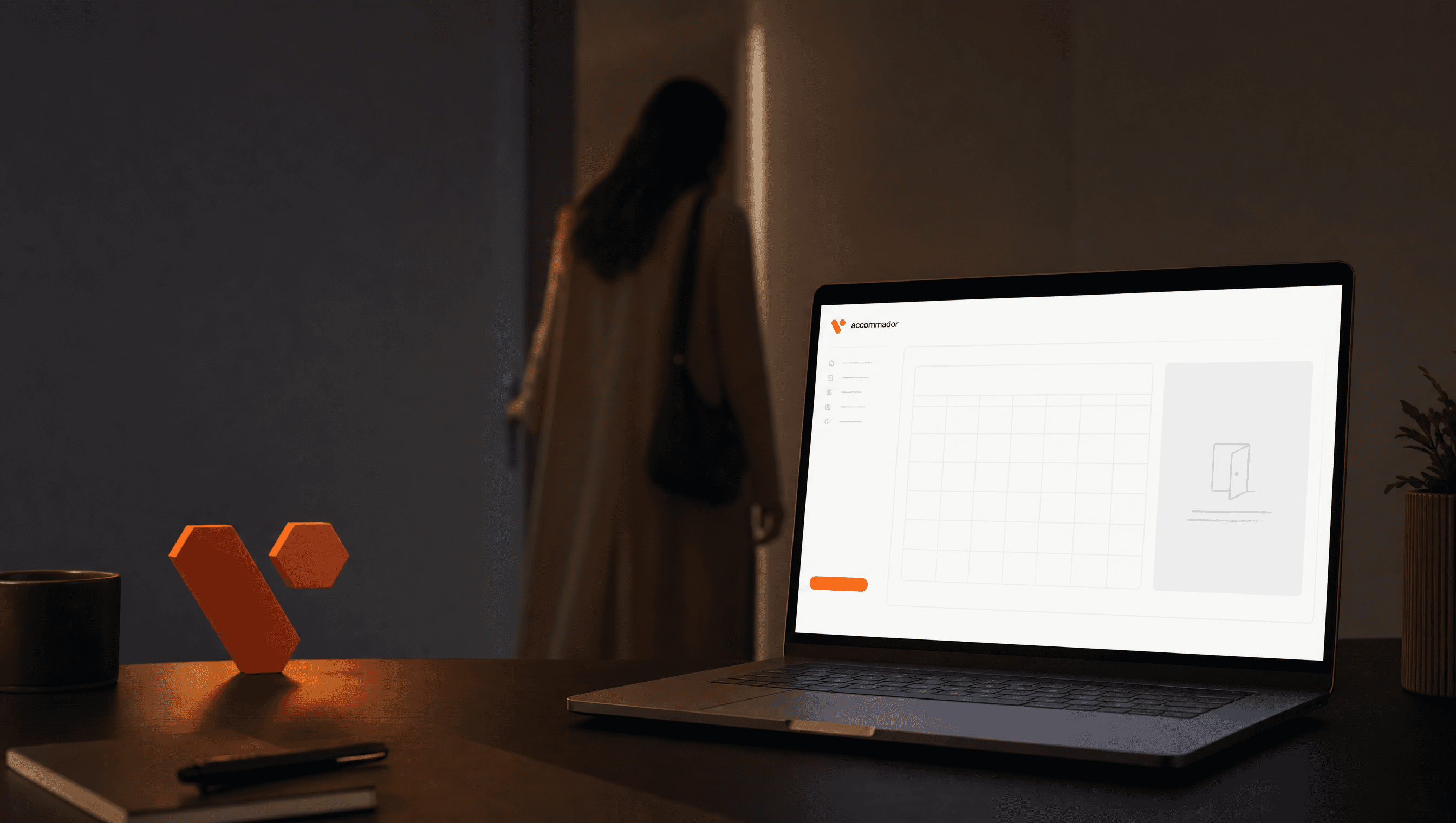
A guest lands on your site ready to book. They want two nights over a weekend. Your engine looks at its rules, decides those exact dates don't fit, and shows them "no availability." They don't read that as "those dates don't work." They read it as "this place is full" — and they bounce to Booking.com, where they find your room and book it. You pay commission on a guest who was already on your own site.
That is one leak of several, and most independent operators are losing money to all of them without ever seeing a line item for it. To get more direct bookings instead of paying the OTAs, an owner-operator needs three things working together: a branded booking engine that never says "no" when a stay is actually bookable, server-side ad attribution that survives Apple's cookie cap, and one bill instead of six.
This guide is the full playbook — the real cost of OTA commission, why your own site leaks ready-to-book guests, and what a complete direct-sales engine looks like. It's written for owner-operators of 5–80 rooms: houseboats, lodges and cabins, boutique motels, B&Bs, short-stay villas and small hotels — the kind of place that runs minimum-stay or fixed-arrival rules and already spends money on ads. If that's you, every section below is something you can act on this week.
The real cost of OTA commission (napkin maths)
The OTAs feel free because you only pay when you get a booking. But "only when you get a booking" is the expensive part. Commission of 15% is common, and 18–20%+ is normal once you add visibility programs, preferred-partner boosts and the genius/loyalty discounts the guest sees but you fund.
Here's the napkin maths for a mid-size operator. Say you run a property doing $1,000,000 a year in accommodation revenue, and 60% of that flows through OTAs at an average 17% commission:
- OTA revenue: $600,000
- Commission paid: $102,000 per year — roughly $8,500 a month handed to the channels.
- Now shift just 20 percentage points of that OTA volume to direct. That's $200,000 of bookings moving off-channel:
- Commission saved at 17%: $34,000 per year.
You don't need to go fully direct. Moving a fifth of your OTA volume to your own booking engine saves more than most operators spend on their entire software stack. The OTAs are a fine shop window. They're a terrible landlord. The goal isn't to delist; it's to stop re-buying guests you already paid to acquire.
Why your own site loses ready-to-book guests
Most operators already have a website. Most operators still lose the guest who arrives ready to book. The leak isn't traffic — it's the last 90 seconds between "I want to stay here" and a confirmed, paid reservation.
Three things send a ready-to-book guest back to the OTA:
Friction. Too many clicks, a clunky calendar, a form that asks for everything before it shows a price, or a checkout that doesn't feel safe to put a card into. Every extra step is an exit.
No price-parity confidence. If the guest can't instantly see that booking direct is at least as good as the OTA — same rate, plus something extra — they default to the platform they trust.
A booking engine that says "no" when the answer is "yes." This is the big one, and it gets its own section next.
A direct booking should be the easy path, not the brave one. That means a branded engine on your own domain, a price the guest can see without a form, secure payment they recognise (card, plus Alipay and WeChat for inbound guests), and a confirmation that lands before they second-guess themselves. Accommador's booking engine is built for exactly this — it's Accommador's own, on your brand, and included.
The minimum-stay leak (the one costing you the most)
This is the leak nobody measures, because you never see it happen.
Picture a guest searching your site for a two-night stay over a weekend. But you run a three-night minimum on weekends, or a fixed Saturday arrival. Most booking engines do the literal thing: the requested dates don't satisfy the rule, so they show "no availability."
The guest doesn't read that as "those exact dates don't work." They read it as "this place is full." So they bounce — straight to an OTA, where they'll find your room, or a competitor's, and book it. You never see the search. You never see the lost booking. There's no line item for it. It just quietly bleeds.
This is the min-stay leak, and it's the single most under-measured cost in independent accommodation. It's worst for exactly the operators this guide is for — the houseboats, lodges, villas and boutique motels that run minimum-stay and fixed-arrival rules in the first place.
Accommador's restricted-stay engine does the opposite of "no availability." When a guest's dates miss your rule, instead of a dead end it surfaces the 3 nearest bookable dates — the closest stays that do satisfy your minimum-stay or fixed-arrival rule — and lets the guest book one of them on the spot. The search that used to bounce to Booking.com now converts on your own site, commission-free.
Run the maths on even a handful of these a week. If the leak is quietly losing you two bookings a week at an average $900 stay, that's roughly $93,600 a year in bookings walking out the door — most of which would otherwise rebook through an OTA at 17%, costing you commission on top of the bookings you keep. Plugging the leak is the highest-leverage change most operators can make. The reason the nearest-bookable-dates engine is built into Accommador is simple: a "no" that should have been a "yes" is the most expensive thing your site can say.
Measuring ad spend after Apple's cookie cap
If you spend on Google or Meta to drive direct bookings — and the operators this guide is for already do — you have a measurement problem you may not know about.
Since around 2021, Apple's Intelligent Tracking Prevention has capped client-side tracking cookies at roughly 7 days. In plain English: the standard browser-based tracking that ad platforms rely on now forgets the guest after about a week. Accommodation has a long consideration window — people research a Murray River houseboat or a Margaret River villa for weeks before they book. By the time they book, the cookie that connected the click to the conversion is gone.
The result: your ad reporting under-counts the bookings your ads actually drove. You can't see which campaigns, keywords or creatives convert. So you do the worst possible thing — you cut the spend that's working because the dashboard says it isn't, and you keep the spend that's quietly wasting money.
The fix is server-side attribution: recording the conversion on your own server, where Apple's browser cap doesn't reach, and passing it back to the ad platforms. That restores the line of sight between an ad dollar and a booking — so you can scale what works and kill what doesn't with confidence. It's built into Accommador and survives Apple's 7-day cookie cap, because guessing which campaigns pay off is not a strategy.
The fragmented 6–9-tool stack vs one platform
Here's the quiet tax on most independent operators: the stack. To run direct bookings properly you typically need a channel manager, a PMS, a booking engine, email, SMS, a reviews tool, a social planner, a site or funnel builder, and ad attribution. That's 6–9 separate tools, each with its own login, its own bill, its own integration that breaks at the worst time. Priced out for a typical 30-room operator, that fragmented stack runs well over $1,000 a month once you add up every line.
So the comparison isn't "Accommador vs free." It's "Accommador vs the six-to-nine tools you're already paying for, plus the hours you spend keeping them stitched together." Accommador is one login and one bill — channel manager, PMS, branded booking engine, the restricted-stay engine, the full marketing and CRM suite, security-bond holds and self-reconciling Xero, all included.
One platform also kills the failure mode that costs you the most: conflict and double-bookings. With conflict detection running across 100+ channels, availability stays in sync, so you don't oversell a room and refund an angry guest at 11pm.
What a complete direct-sales engine looks like
- A complete direct-sales engine for an independent AU operator has six parts working as one — and on Accommador they're all included, not bolted on:
- A branded booking engine on your own domain — Accommador's own — so direct is the easy path, not the brave one.
- A restricted-stay engine that surfaces the 3 nearest bookable dates instead of "no availability," so min-stay searches convert.
- A 100+ channel manager with conflict detection, so the OTAs stay a shop window and never become a liability.
- A marketing and CRM suite — email, SMS, automations, reputation, funnel builder, CRM — to turn one-time guests into repeat direct bookers.
Payments that fit accommodation — Stripe and PayDollar with security-bond pre-authorisation holds (including Alipay and WeChat), and self-reconciling Xero so the books close themselves.
Server-side ad attribution that survives Apple's cookie cap, so every ad dollar is measurable.
Every one of those is part of the one platform. There are no tiers to climb and no feature you have to upgrade to unlock — the engine that plugs your min-stay leak is the same engine that runs your channels, your marketing and your books.
Putting it together: a 90-day plan
You don't have to do everything at once. The order that returns the most, fastest:
Week 1 — Find the leak. Search your own booking engine with dates that miss your min-stay rule. If it says "no availability," you've found money.
Weeks 2–4 — Plug it. Move to a branded engine with a restricted-stay rule, so missed-date searches surface the 3 nearest bookable dates instead of bouncing.
Weeks 4–8 — Re-capture OTA guests. Use email and SMS automations to turn OTA-sourced guests into repeat direct bookers.
Weeks 8–12 — Make ad spend measurable. Turn on server-side attribution so you can scale the campaigns that actually drive bookings.
Each step compounds. Plug the leak and direct volume rises; re-capture guests and your repeat rate rises; measure ads and your cost per direct booking falls. And you still keep your OTA listings the whole way — treat them as a shop window, not a landlord. The goal is to stop re-buying guests you already paid to acquire.
The closed-loop direct-sales engine on Accommador — marketing, booking engine, OTA distribution, payments and Xero reconciliation in one place — starts at from $500 AUD/mo per location, everything included. Monthly billing, cancel anytime. Start free.